
Baldness is multidimensional
To cure androgenetic alopecia, first the root cause must be discovered which is near impossible due to baldness being multidimensional, involving various factors each interdependent. The true cause of hair loss is like a chameleon hiding in plane sight, mutating based on the situation and environment. One may think age is the root cause but some senile men still have hair. Surely genetics may be the cause but some men have full hair despite every male relative being bald. Maybe sexuality but some men are as sexually immoral as ever yet have full hair. It could be the environment but people that live in the same environment have varying degrees of hair loss. Too many exceptions to the rule to see a clear pattern to determine the root cause. To investigate hair loss, first let's do a hypothetical experiment and see if the investigation is feasible based on what is already known.
Let's start by looking at the simplest factor known to all. Age is a factor well associated with baldness in every society. The degree of hair loss is associated with how old you’re therefore hair loss has been used to predict age. Furthermore age has a well defined metric counted in years. A year represents a unit of time easily understood by humans, measuring the passage of time. Below is a graph plotting age against degree of hair loss from androgenetic alopecia.
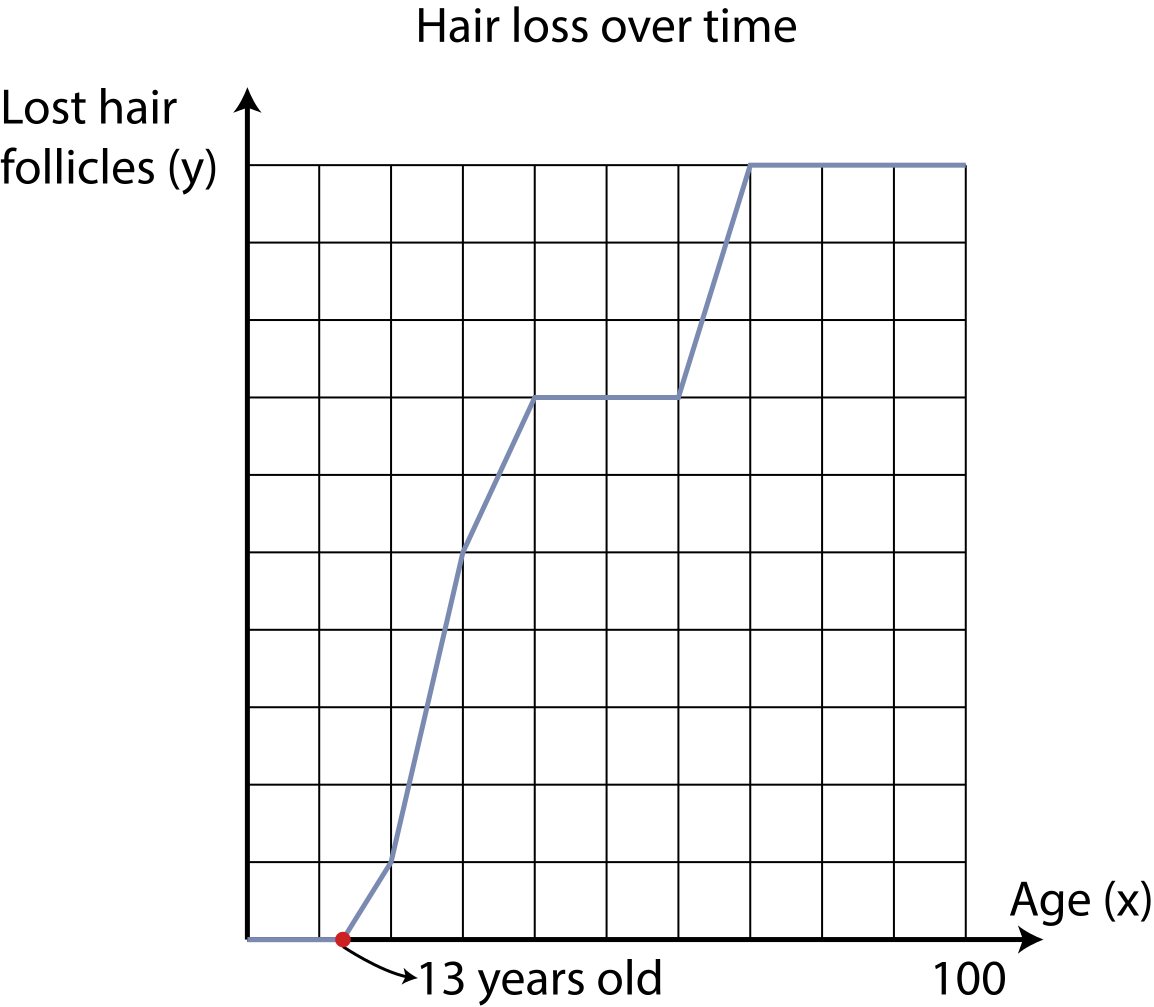
It's a typical graph of a person who starts to lose hair early in their life. If hair loss is visible at late teens, it must have begun at early teens. Notice that hair loss begins after 13 years old around the age where spermarche or menarche happens. This marks the age when children start to transition into adults due to the body's androgenic activity speeding up. There are different graphs for each person however a pattern persists that hair loss never begins before spermarche age. Evidently after spermarche age, hair loss is sporadic. Throughout life, hair loss begins, slows, speeds up, stops without an apparent reason at irregular ages. After age 13, the graph is sporadic and unpredictable to most observers. However what most forget is that there are other factors besides age that influence the degree of hair loss. For example, genetics, sexual vector and the environment. So far we only have age on the x-axis. Now visualize the graph and imagine the extra factors included with their own dimension. It's hard to visualize, let alone show in a graph. Finding a pattern that shows the root cause of hair loss is even harder as everyone has unique variable factors. The more dimensions in a graph the harder it is to find a pattern thus we run into a phenomenon called the curse of dimensionality. Finding the root cause is an impossible mission at least in our lifetime. We can’t help but believe in a cause but let’s continue looking at the other factors and how they fit in the graph.
Genetics
Unlike age, genetics can’t easily be placed in its own dimension since it doesn’t have an obvious metric. A possible metric is measuring blood DHT level because DHT miniaturizes hair follicles. However, the way DHT works is a paradox, it grows body hair while miniaturizing scalp hair in the balding area. Higher DHT doesn’t always mean more hair loss because hair follicle sensitivity is involved. Generally when DHT is reduced with medication, the balding process stops. Measuring DHT fails to account for hair follicle sensitivity therefore it's useless as a metric. Instead let's just use an imaginary metric and call it genetic susceptibility. This metric is placed in the z-axis.
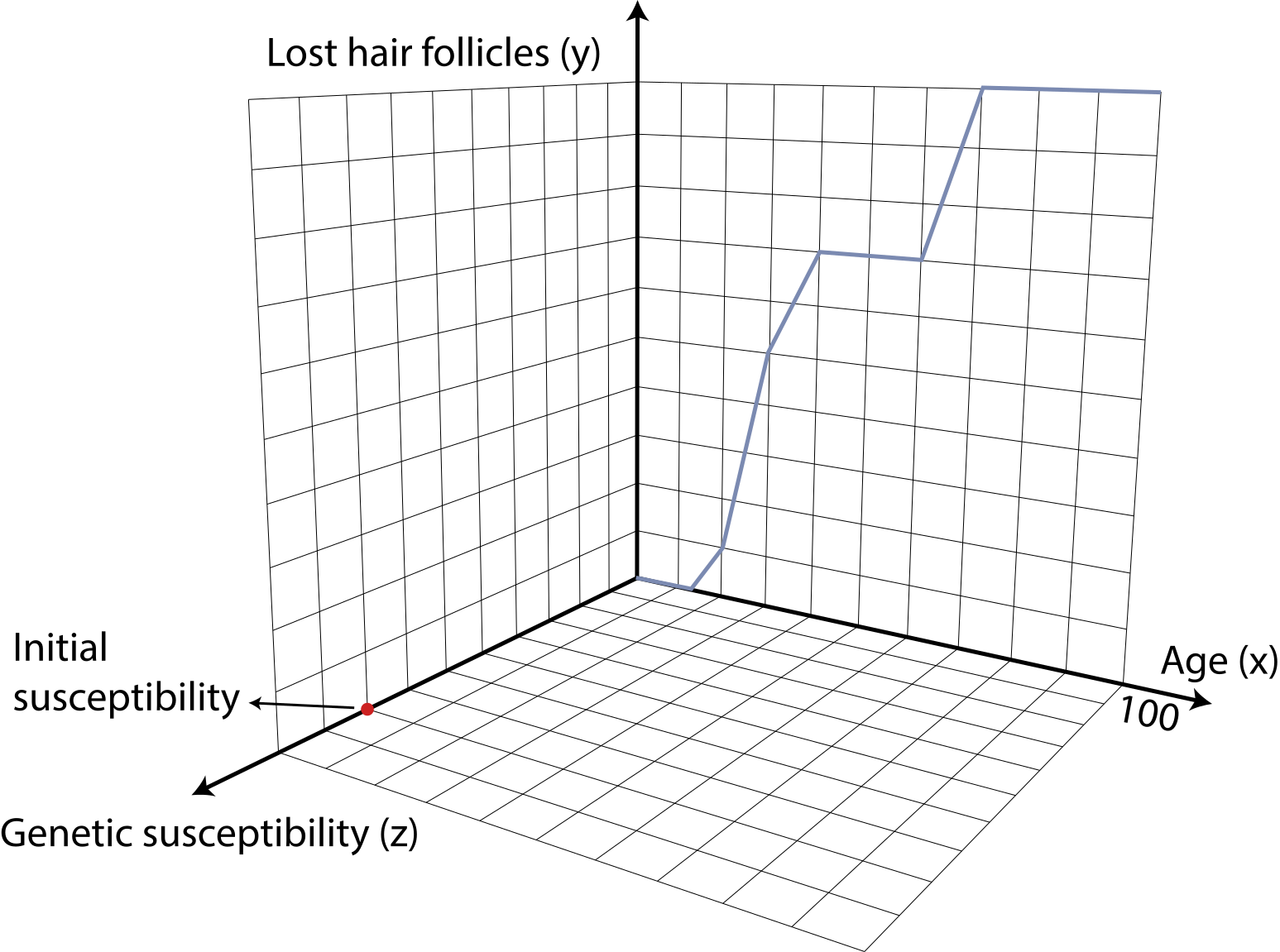
The more susceptible you're, the easier hair loss happens. Genetic susceptibility isn’t a constant value you’re born with, it changes over time owing to epigenetics. What genes are enabled or disabled are determined by the environment a person is in. Each person is born with an initial genetic susceptibility positioned in the z-axis. This initial value is applied only if you’re past a certain age which is spermarche or menarche depending on gender. Genetic susceptibility is a combination of DHT level, hair follicle sensitivity and other unknown factors. DHT levels drop as a person ages but hair follicle sensitivity to DHT increases. This is why hair loss can still happen at an old age. On this 3 dimensional graph of the same person, hair loss starts in their early teens because they have more DHT and are highly susceptible to it. There is interdependence between age and genetic susceptibility, making it difficult to find a pattern.
Genetic predisposition isn’t a predestined fate although genetics does hold a significant influence over whether you’ll lose hair or not. Most men who are susceptible do eventually become bald but there are hidden factors, influencing in another dimension. For example, most identical twins have more or less the same hair loss. However, the difference between each pair of identical twins varies. This reveals the hidden factor is a variable that can change and overcome genetic susceptibility. Although a case where this hidden variable is high enough to produce one twin with hair and another bald is yet to be seen after all, identical twins are 0.3% -- 0.4% of the global population. It's statistically impossible finding such a twin within a small population when baldness is prevalent. To make matters worse, in order for twins to be different they will probably have to live in different environments but the world is globalized. There isn’t a big difference between most environments unless you live in a remote area lacking basic needs. This means the twins have to be located twice if they were separated at a very young age before the onset of puberty.
Let’s only consider identical twins in the graph. Because genetic susceptibility and age are almost identical, the z-axis can be removed from the graph, reducing dimensionality. Now we’re back to the same two dimensional graph above with lost hair follicles against age but only with identical twins as subjects. Now another factor (dimension) can be added to find a pattern that will help in discovering the true cause of hair loss but there is a major problem as the data (subjects) is limited. Remember identical twins account for 0.3% -- 0.4% of the global population. Scientists can only have a small subset of this population as candidates for an experiment. This is the curse of dimensionality.
The curse of dimensionality refers to various phenomena that arise when analyzing and organizing data in high-dimensional spaces (often hundreds or thousands of features) that do not occur in low-dimensional settings. As the number of dimensions increases, the volume of the space increases so rapidly that data becomes sparse, making it difficult to find patterns, causing, and requiring exponentially more data to maintain model accuracy.
Limited data means the pattern found isn’t strong enough as evidence. To explain this phenomenon, imagine we have 20 pairs of identical twins who never received medical treatment and are suffering from hair loss. They are also over 30 years old which gives us enough history about their lifestyle. Let's look at one pair represented by letter A. The difference in their hair follicle count is about 100. Now let’s look at pair B with a difference of 250. In other words, there is a lurking variable causing the extra hair loss besides genetics and age. As the name suggests this lurking variable varies among the twins. Discovering this hidden variable, will help in finding what is causing hair loss. Let’s put each pair of twins in ascending order based on hair loss count differences.
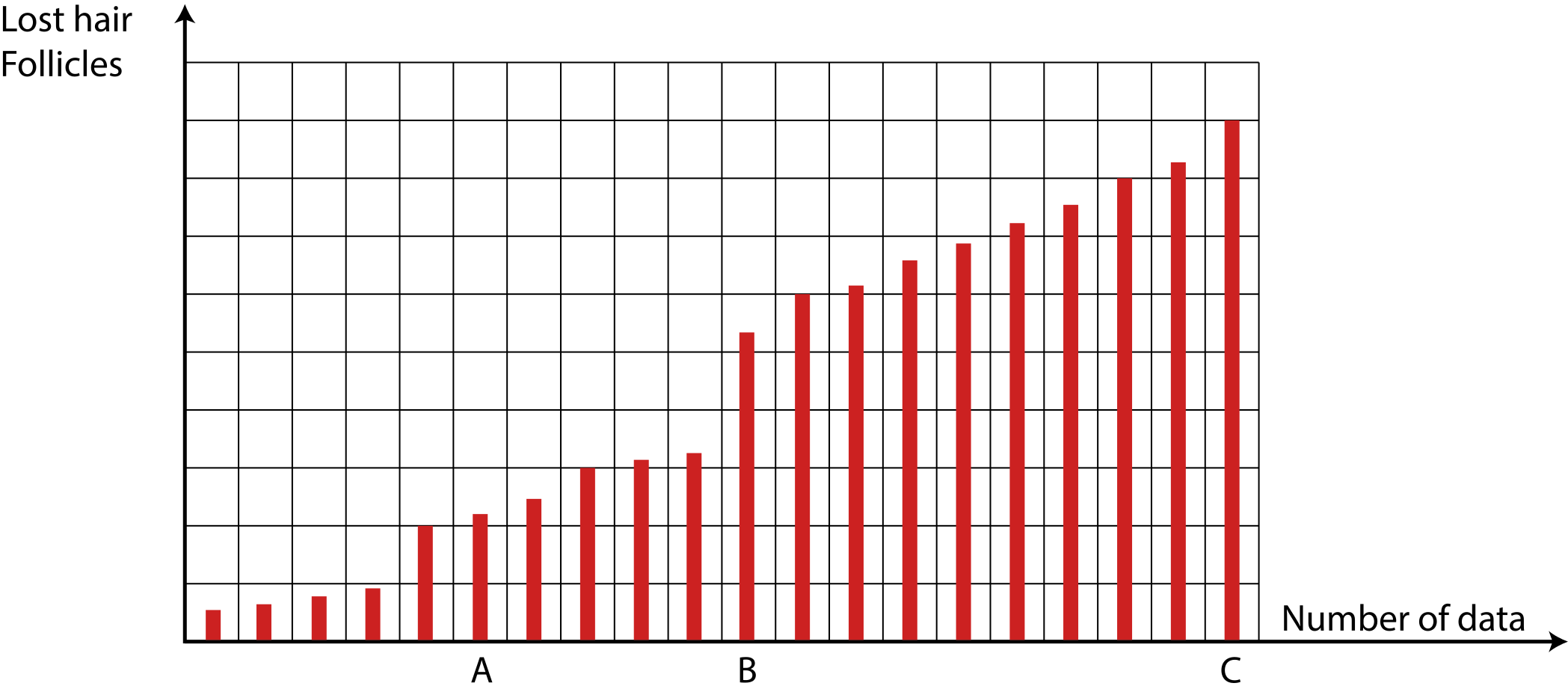
Look at pair C with the biggest difference. The lifestyle difference that yields a difference of 400 hair follicles isn’t evident enough where it stands out and can be extracted. On the contrary, the lifestyle difference can easily be confused for something else like diet or exercise. Notice that the bar chart ends abruptly because the number of subjects is limited. However if there were more volunteers, extra bars would appear at the start, in between and the end. By extrapolating the chart, we become aware of the possibility of finding a pair of twins with maximum difference. If we keep adding volunteers the chart would reach a point where lost hair follicles differences are minimum and maximum at both ends. At maximum point one twin is bald and the other isn’t. Finding this many volunteers is unlikely since identical twins are 0.3% -- 0.4% and distributed globally.
In the two dimensional graph, there is still a lurking factor influencing lost hair follicles and it’s in another dimension. To find this lurking variable, we must consider other factors (dimensions).
Sexual vector
To find the lurking factor let’s look into sexuality as it’s intimately linked to hair loss. It’s known that castration stops hair loss since ancient times, it was first recommended as a treatment option in aphorisms of Hippocrates. Castration stops further hair loss but doesn’t return hair that was already lost. In other words, this treatment is most beneficial as early as 13 years old when children face the possibility of hair loss. When hair loss has already progressed much, castration is a wasteful treatment. The only men who were free from the possibility of hair loss were eunuchs but it came with a price that most men wouldn’t take. The sexual drive (libido) of a eunuch is very low unlike an intact male. Finasteride lowers DHT, a hormone that plays a complex role in libido. Women also have lower libido than men. The common factor here is libido. To find a pattern, first visualize a graph of average sexual drive throughout life.
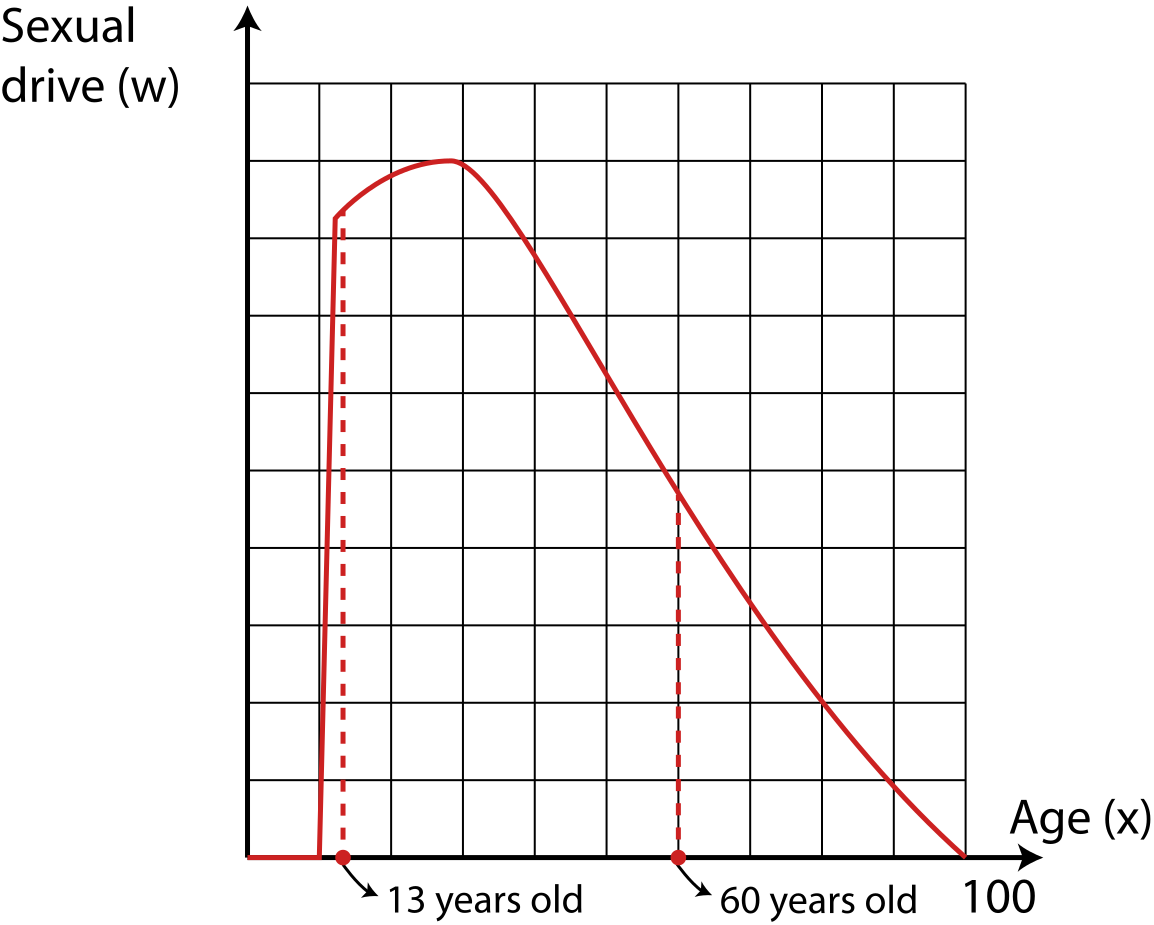
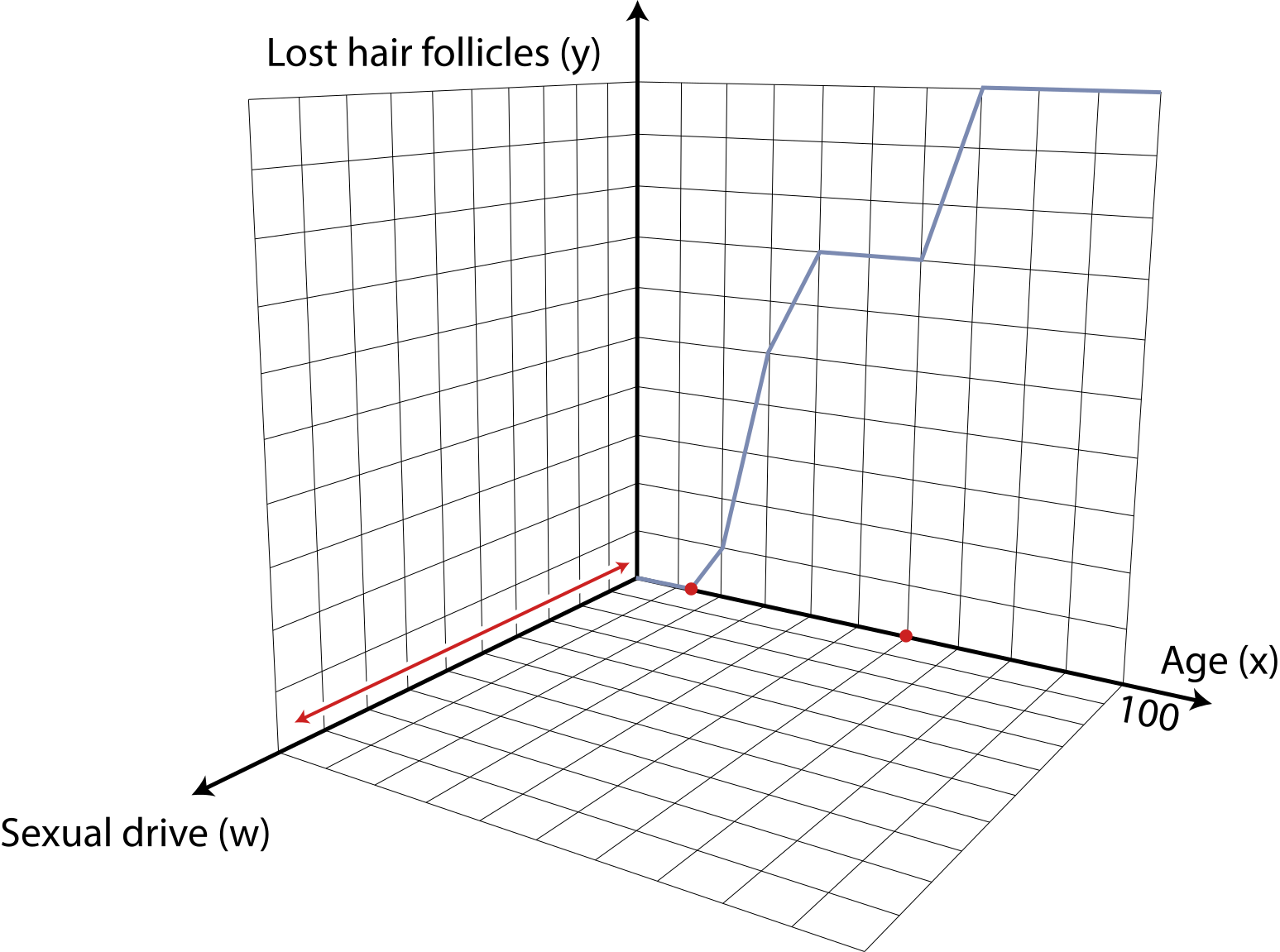
As seen in the graph, libido is very low before 13 years old. It’s expected for libido to increase sharply after 13 years old, the earliest time hair loss can begin. Libido is highest between the ages of 20 and 40, the period where hair loss is most active. Then there is a slow drop in libido due to old age. However libido can fluctuate as a result of environmental factors, operating in another dimension. There is an anomaly shown in the first graph because hair loss increases after 60 and it can be explained by a 60 year old suddenly exercising and eating healthy, to increase their libido. Because this is a graph of identical twins, the genetic susceptibility dimension doesn’t need to be accounted for. The graph reveals a pattern that in order to lower chances of hair loss, libido must be lowered one way or another. The root cause of hair loss seems to be localised to the genitalia or more precisely how one uses it. How sexual drive is dissipated has to be investigated. Asking subjects what they do sexually is an inappropriate question to ask and it's a ritual humiliation. Their honesty isn’t even guaranteed let alone expecting them to reveal any wrongdoing. Doing sexual experiments is inappropriate and respected scientists don’t want to be tainted with that kind of reputation. Some believe that masturbation, pornography and sexual thought are the root cause but proving it is very difficult.
Alternatively it's better to use sexual vector as a metric since it has two components. Sexual drive (libido) is the magnitude component while sexual orientation is the direction component. In other words, sexual desire is a vector. Some men may have high libido but don’t act on it because they don’t find what their desires are directed at. To account for all components of sexual desire it's better to use sexual vector instead of just libido. Sexual vector is influenced by the environment a person is in. Women and men don’t have the same sexual vector which is why hair loss affects them differently.
Environment
The environment is a vast topic that can’t be covered in this article alone. If you want to learn more, buy the book “Cure Baldness”. It is linked to sexual vector in an obscure way. Basically the environment controls exercise and diet which in turn influence sexual drive. The environment can also provide a fetish your sexual orientation is directed at therefore further inciting sexual drive. There isn’t an obvious metric for both exercise and diet. You can’t combine them like we did with sexual drive and orientation. Furthermore sexual orientation is a category that the environment provides instead of a number. All twins are initially born in the same environment then later in life the environment slightly changes. There isn't a drastic change in the environment. Finding twins that live in completely different environments where the lurking variable is most expressive is highly unlikely. The twins would have to be separated before puberty. This lowers the pool of volunteers (subject). We run into the same problem called the curse of dimensionality.
Conclusion
On the whole conducting an experiment that proves the true cause of baldness isn’t feasible because of the curse dimensionality and the shame associated with sexuality. This hypothetical experiment seems to point at sexual immorality as the culprit. Everyone's threshold in what is enough evidence for them to believe is different. For you the evidence may have proved something to you. However for others it proves nothing and they will believe whatever aligns with their lusts. We can’t help but rely on a belief because we have limited time and data. Summarizing all the factors, leads to the following equation.
Hair loss = f (A, G, S, E)
In simple words, hair loss is a function of age, genetics, sexual vector and environment. This is the hair loss equation, a tool that can predict hair loss unless medication or other treatment is taken.