
Arrector pili muscle
Regenerating lost hair follicles is a task that seems impossible even with modern knowledge in biology. Regenerative medicine has advanced in the past few years but much progress is needed, perhaps too much to wait for. Currently, scientists in the field are experimenting with stem cells, a special group of cells that can self-renew and differentiate into other types of cells. Stem cells have the potential to regenerate new hair follicles for many men who are desperately seeking a cure for hair loss but scientists have still not been able to regenerate a single hair follicle fit for use in a human scalp despite billions spent researching. There isn’t a working solution in sight yet scientists have been saying a cure is on the horizon for years all the while receiving money for endless research on stem cells. Every year a new solution is hyped up and then it disappears into obscurity within a few years because it failed to meet its high expectations. Furthermore, if by low chance a discovery is made, it will likely be expensive and cause side effects. Passively waiting for a cure from the scientific community is what many choose for lack of better options. Waiting for a long due cure has been a waste of time but what if there was a way to tap into stem cells without scientists. For ordinary people who lack knowledge, this is unbelievable. However, a closer look into the structure of hair follicles suggests you can actively promote stem cells.
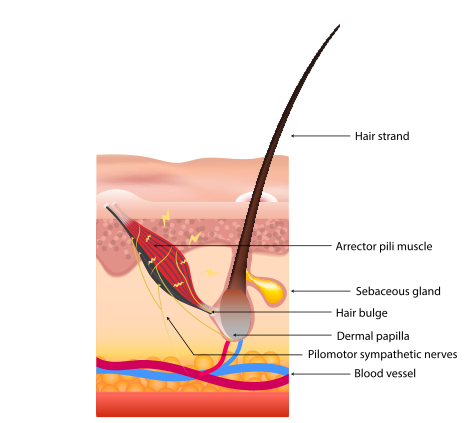
Each hair follicle is made of the components labelled above. The hair bugle is a region which contains stem cells but how do you reach it? Forget using a specialised equipment to access it. Taking a closer look shows a tiny muscle attached to the hair bulge called arrector pili muscle (APM). These tiny muscles hold the key to activating stem cell activity in the hair bulge. Stem cells aren’t destroyed even in late stage baldness where skin is exposed and shiny. Generally, after APM deteriorates, the hair follicle can no longer be revived with any medical treatment. When APMs are contracted, the hair is erected and goosebumps show up on the skin. There are various ways to engage APMs and one of them is cold exposure. When furry animals are exposed to cold weather, the APMs are engaged which in turn grows thicker hair for insulation. The opposite happens when exposed to warm weather. APMs are vital in influencing stem cell activity to regrow fur. Unlike other mammals humans don't have fur nor do they need it for insulation since they are intelligent enough to wear clothing. For humans it's preferable to cover the head with hair which encapsulates the intelligence needed to survive. Hair on the scalp is also needed for aesthetic reasons. In humans, cold temperatures won’t grow hair because human hair follicles are designed differently from that of animals. Even hair follicles on the balding region are different from hair follicles on other regions of the body. This is seen in the contrasting ways the hair follicle responds to a hormone called DHT, the culprit to male pattern baldness. In the presence of DHT scalp hair miniaturizes while body hair grows longer and thicker.
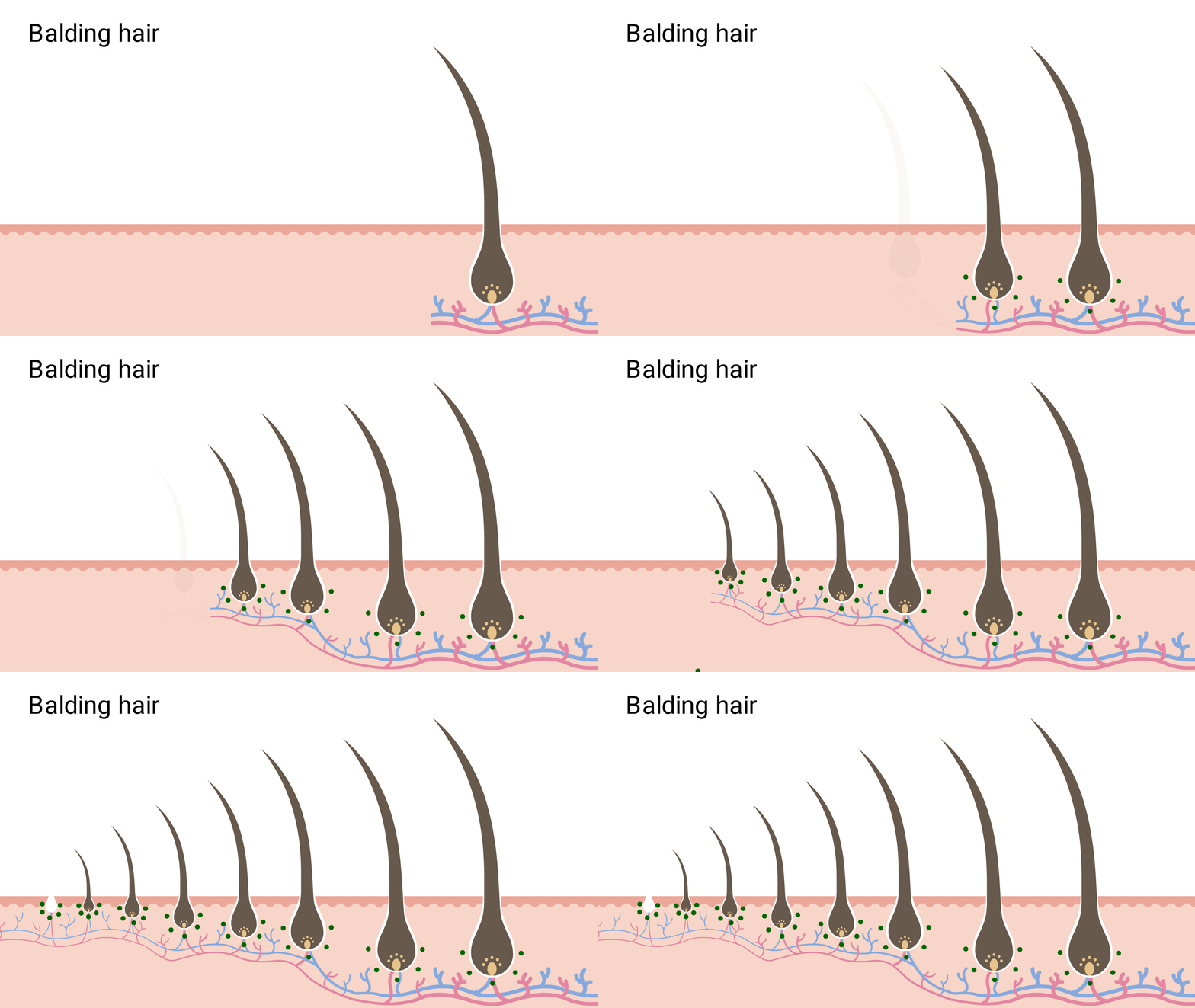
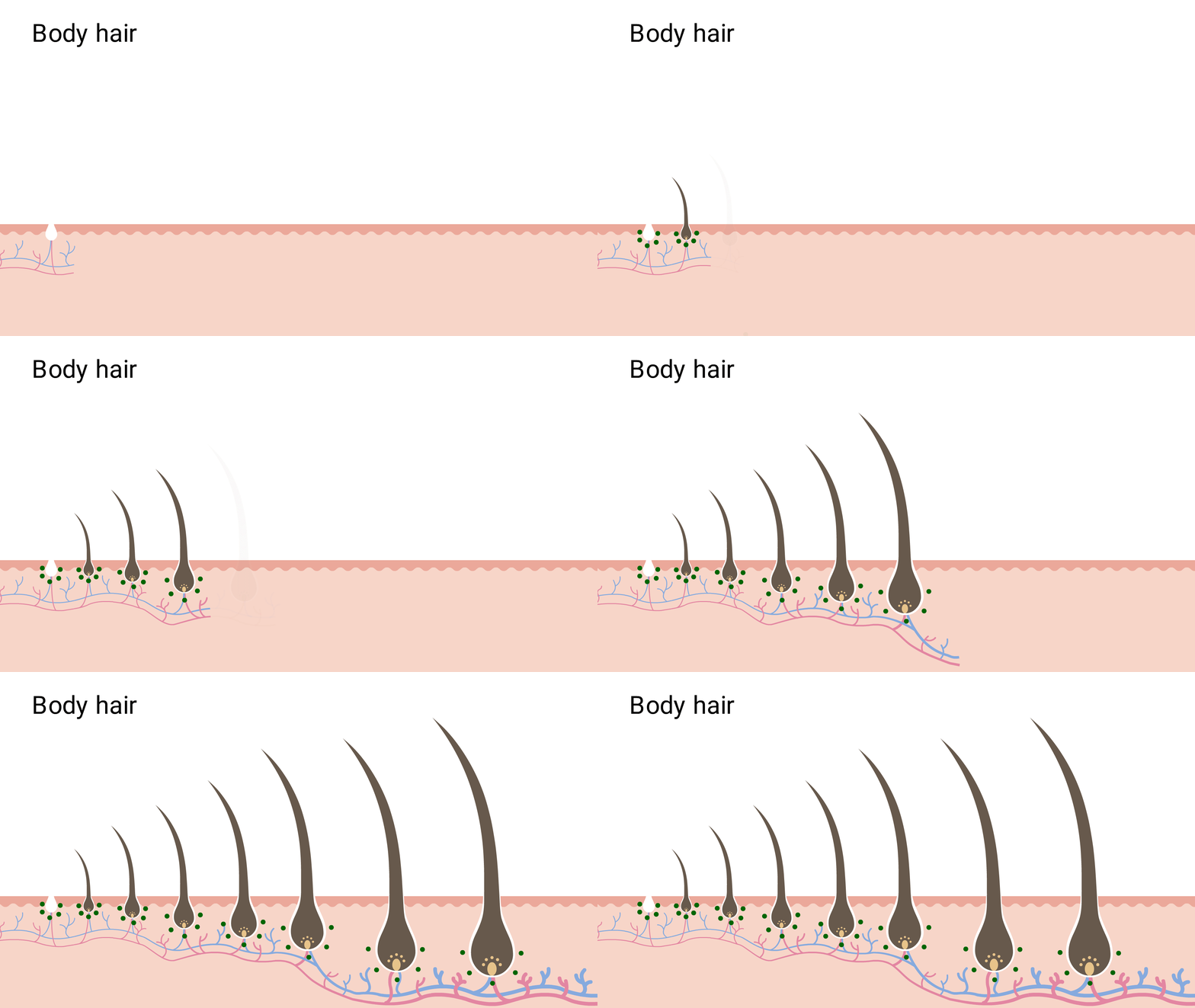
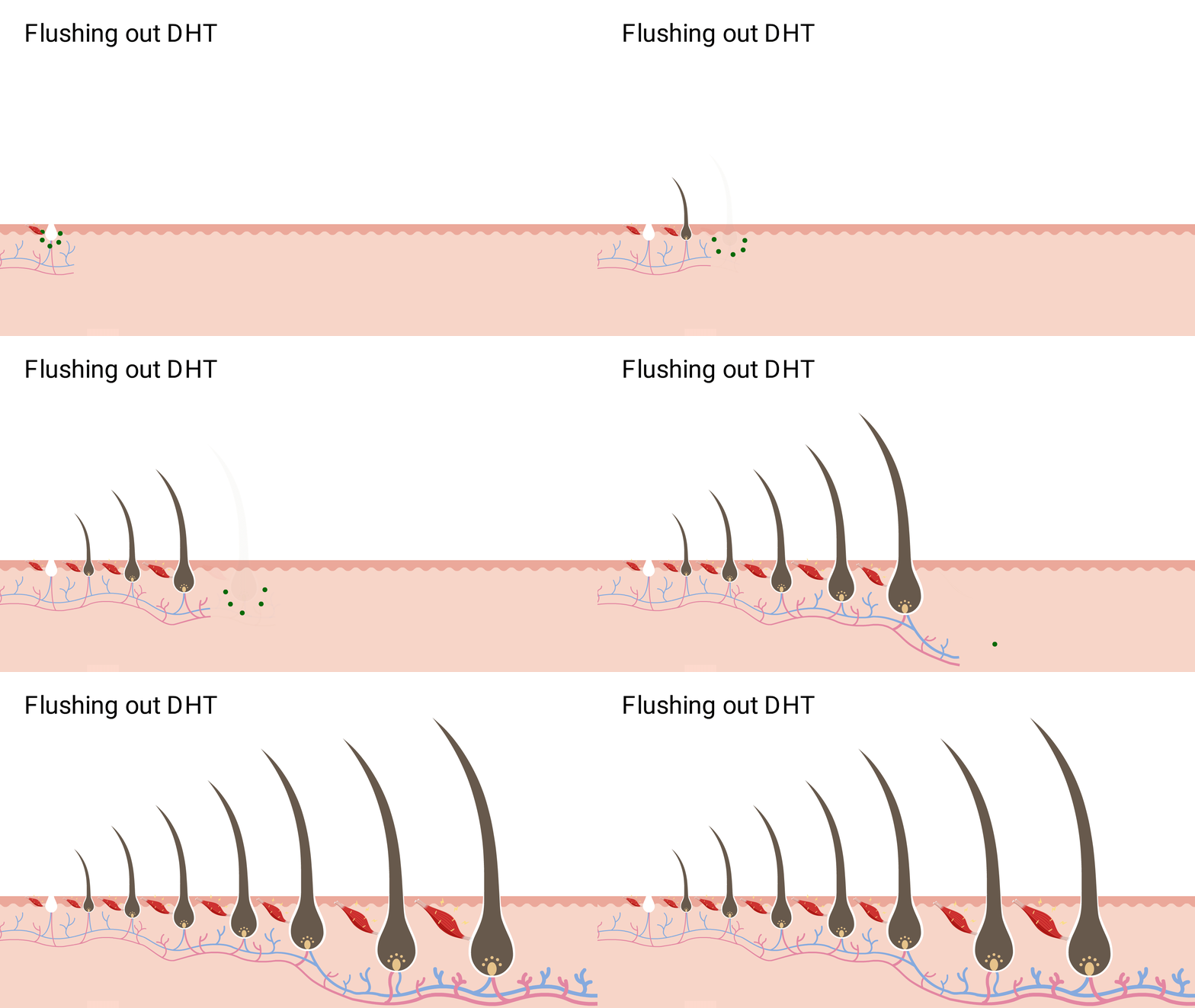
To grow thicker luscious scalp hair, ASMR sensations are necessary to tap into the stem cells confined to the hair bulge. When ASMR is evoked during ritual exercise, APMs are engaged, leading to increased stem cell activity in the hair follicle, resulting in hair regrowth. ASMR also engages the muscles surrounding the scalp, namely frontalis, occipitalis and temporalis as evidenced by static-like sensations that start at the occipitalis region. These sensations are usually localised but with training may reach the target balding region and beyond. The dermal layer of the skin where hair follicles are situated can conduct low electricity. Interestingly, connective tissue sheaths (CTS) that surround each hair follicle have a feature, allowing for contraction and relaxation. Namely the components found in muscle, actin and myosin are also found in CTS. In late stage androgenic alopecia, CTS are hyper-contracted leading to destruction of hair follicles. To break through, electrical muscle simulation (EMS) must be applied in a coordinated and regular manner. ASMR is the key working as EMS under the hood. A single ASMR session isn’t enough to regrow hair. Regular ASMR sensations are needed as in ritual exercise which may be difficult for some people because extreme patience is required. You can expect results within the same time frame as finasteride (3-6 months). However if you indulge in certain types of sexual habits or miss a session of ritual exercise, your hair regrowth will be delayed or even set back. ASMR is the key component in activating hair follicle stem cells to power hair regrowth while also increasing blood flow to the scalp. When APMs are engaged, there is a demand for more blood flow in order to provide nutrients and oxygenated blood to the muscles and also remove waste, particularly DHT.
In conclusion, stem cell activity in the hair follicle can be influenced through means other than scientific methods. A bald person with enough dedication can promote hair regrowth all on their own.